Desk accessories are the cheapest ergonomic fix available. A chair or a sit-stand desk runs to several hundred pounds, while most of what follows costs less than a takeaway, and some of it solves a problem the expensive furniture created.
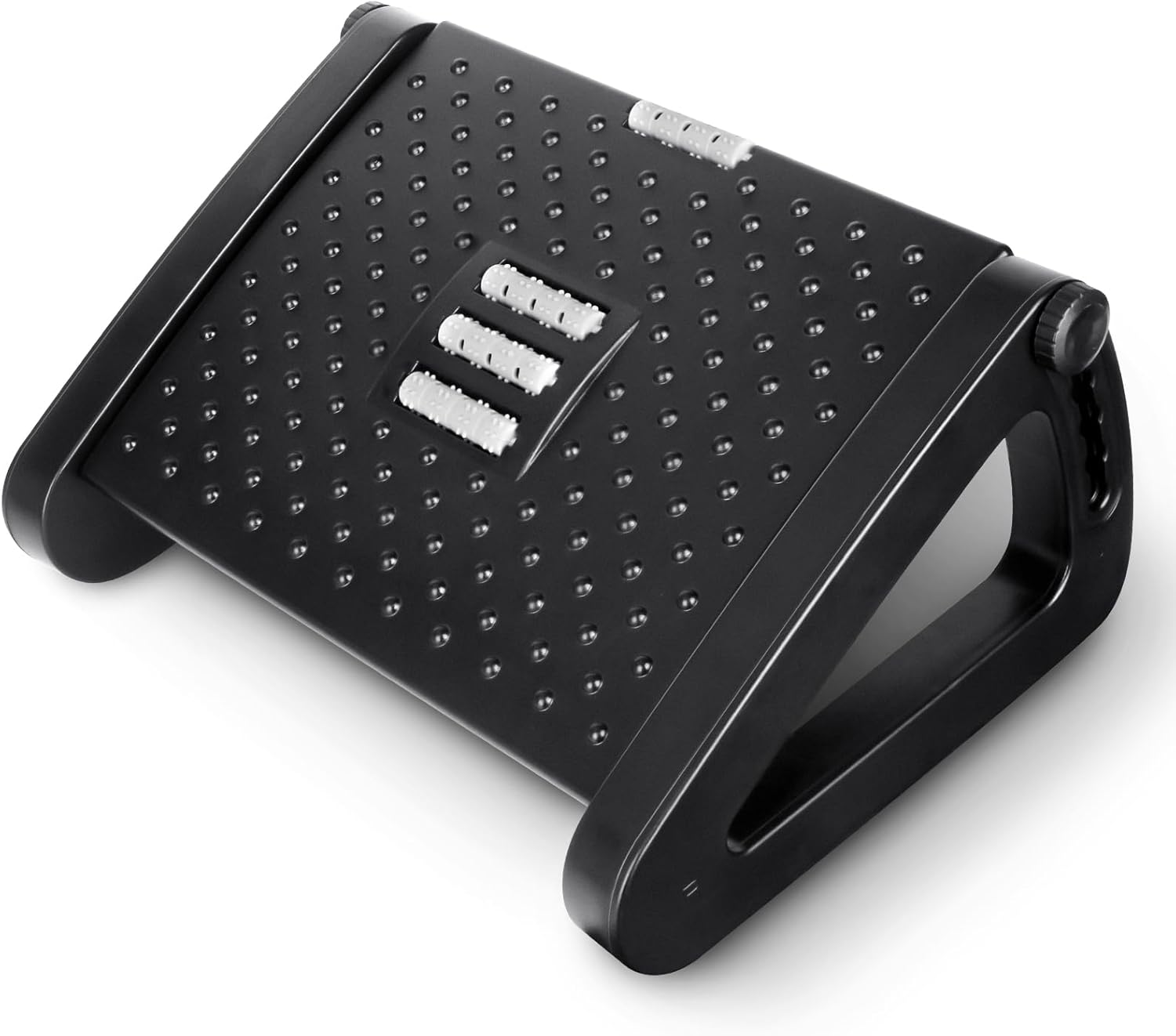
Start with your feet. If your chair is set high enough that your forearms rest level with the keyboard, your feet may no longer reach the floor, which puts the pressure on the backs of your thighs. A foot rest fixes that, and it is not only comfort advice: under the Health and Safety (Display Screen Equipment) Regulations 1992, a UK employer must make a foot rest available to any display screen user who asks for one. Look for adjustable height and tilt rather than a fixed wedge, so you can change position through the day. The Bryze adjustable under desk foot rest covers the budget end at around £14, while the Mintoz foot rest adds a rocking action for anyone who fidgets.
Cable management matters far more once a desk starts moving. Every raise and lower on a sit-stand desk tugs at whatever is plugged in, so trailing leads either snag or quietly unplug themselves. An under-desk tray such as the VIVO two-pack lifts the whole loom clear of the floor so it travels with the desk instead of fighting it.
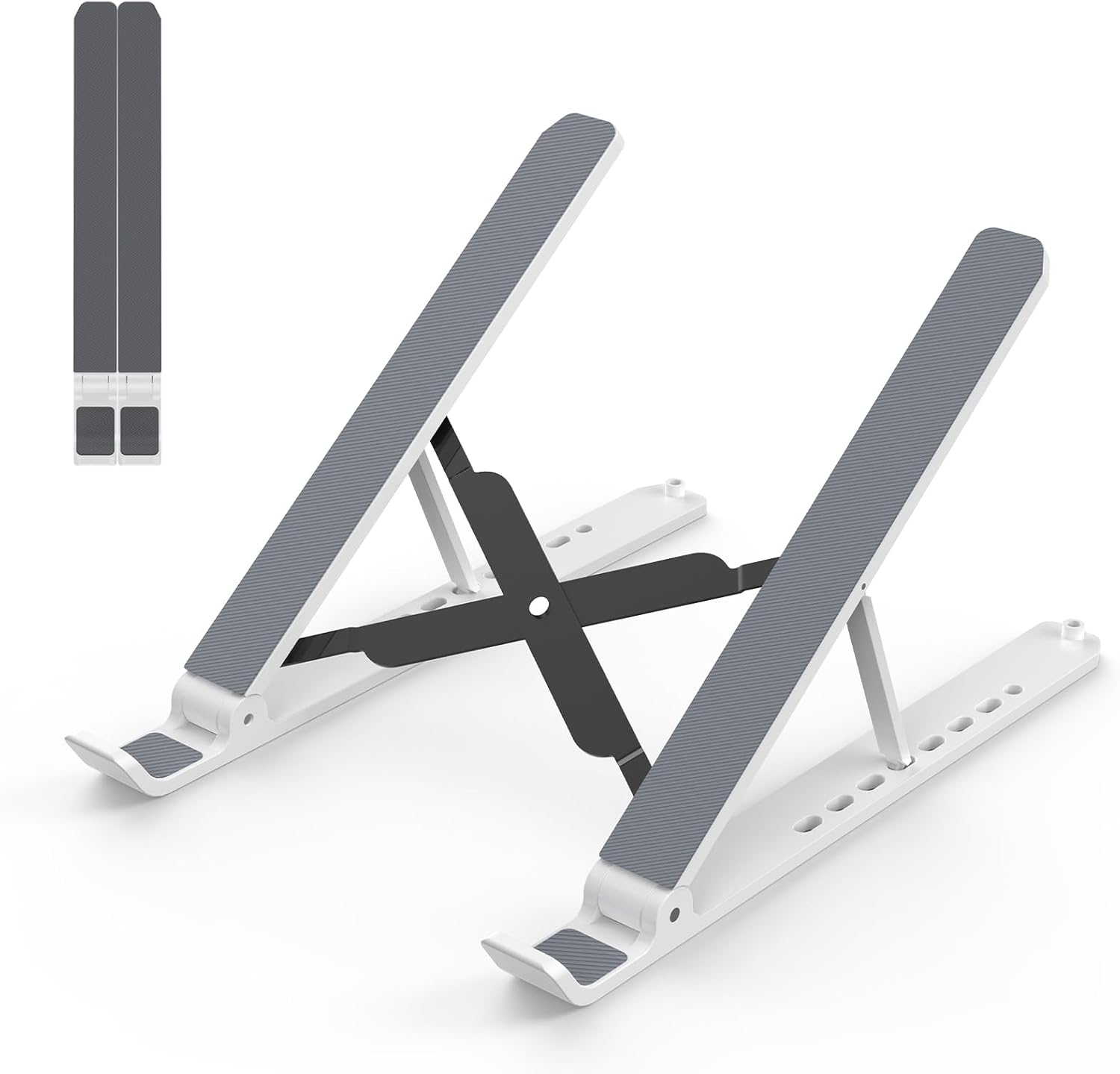
Laptop users need a stand and a separate keyboard and mouse, and the two purchases go together. Raising the screen to eye level is the right move, but it takes the built-in keyboard up with it, so you need an external one to keep your wrists flat. The Babacom ventilated stand is the adjustable option here.
The rest is housekeeping that still earns its place. Replacement rubber castors stop a chair scarring a wooden floor and cost a fraction of replacing the chair. A DisplayPort to HDMI adapter at under £6 is often the only thing standing between a laptop and a second monitor. A mesh desk organiser keeps the surface clear for the work itself.
For the wider setup, work through our UK DSE assessment checklist, and see the best desk accessories guide for how these picks compare.